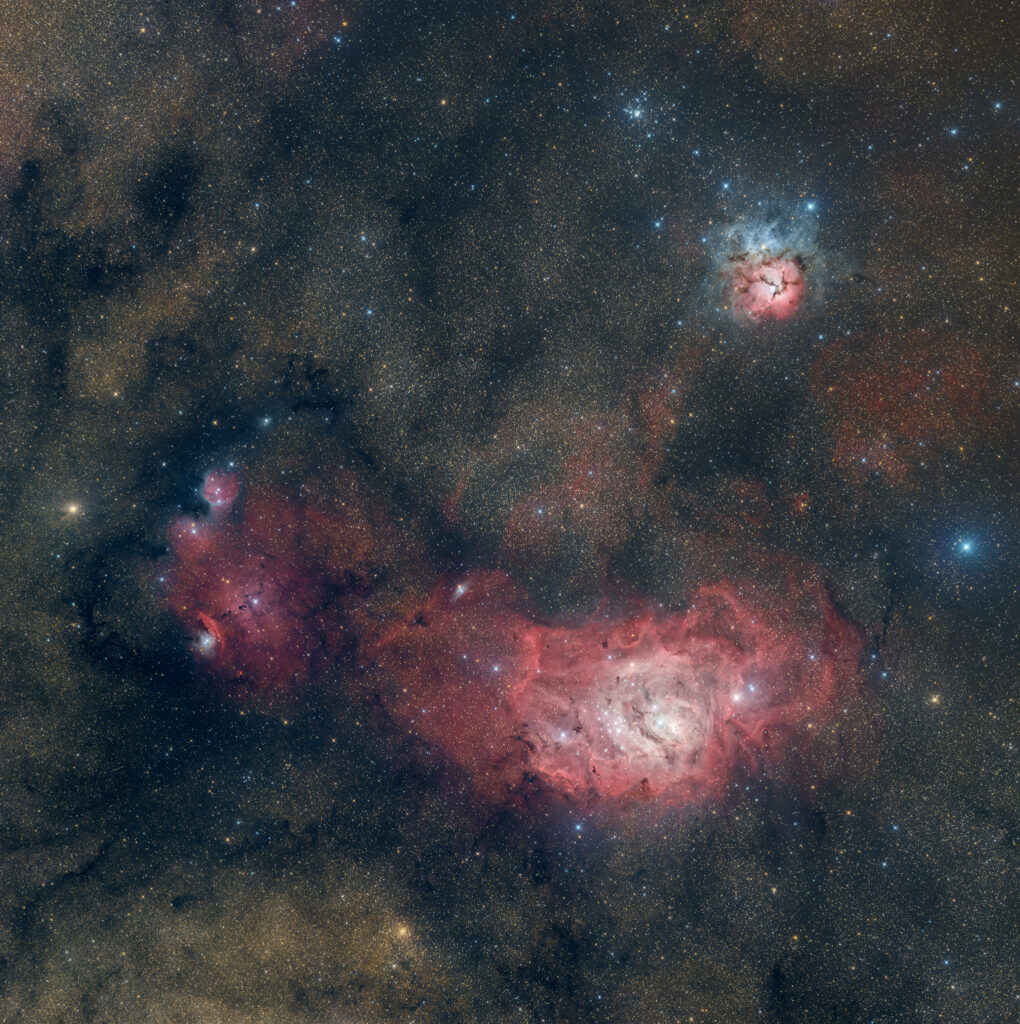
Another widefield, two-panel mosaic with the remote Epsilon-130D and well known objects in the heart of the Milky Way: Trifid and Lagoon with a lot of surrounding nebulae and star clusters.
More details at Astrobin.
Continue readingAnother widefield, two-panel mosaic with the remote Epsilon-130D and well known objects in the heart of the Milky Way: Trifid and Lagoon with a lot of surrounding nebulae and star clusters.
More details at Astrobin.
Continue reading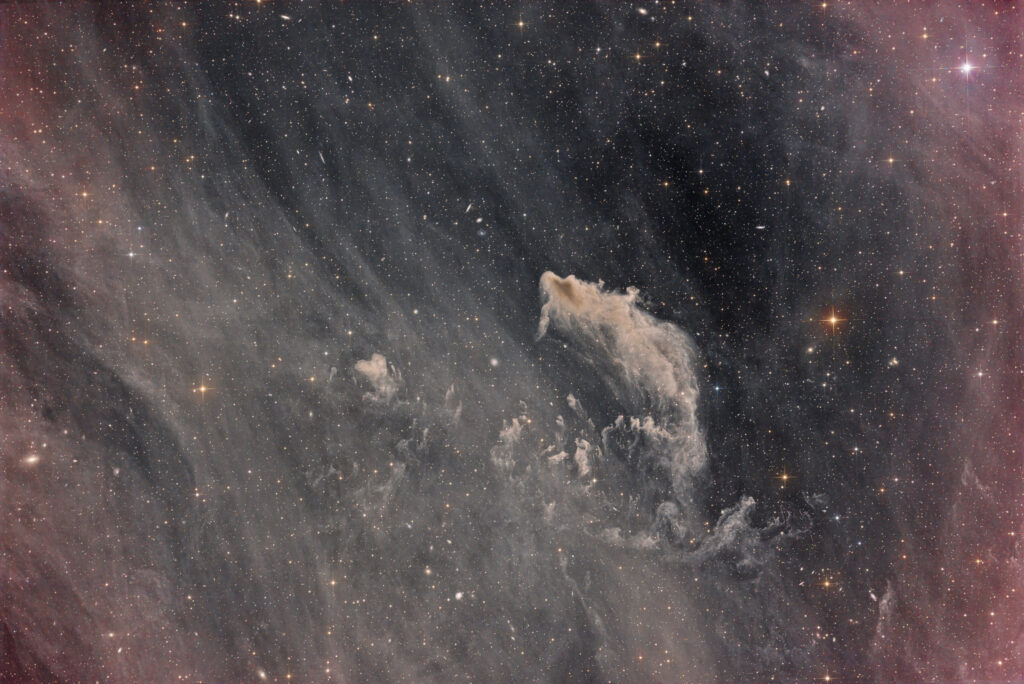
Continuing the with the cometary globules, here comes CG 11, also part of my growing catalog of CGs here at Gallery > Photography > Astrophotography > Cometary Globules.
More details at Astrobin. Also posted to Spektrum Leserbilder Astronomie.
Continue reading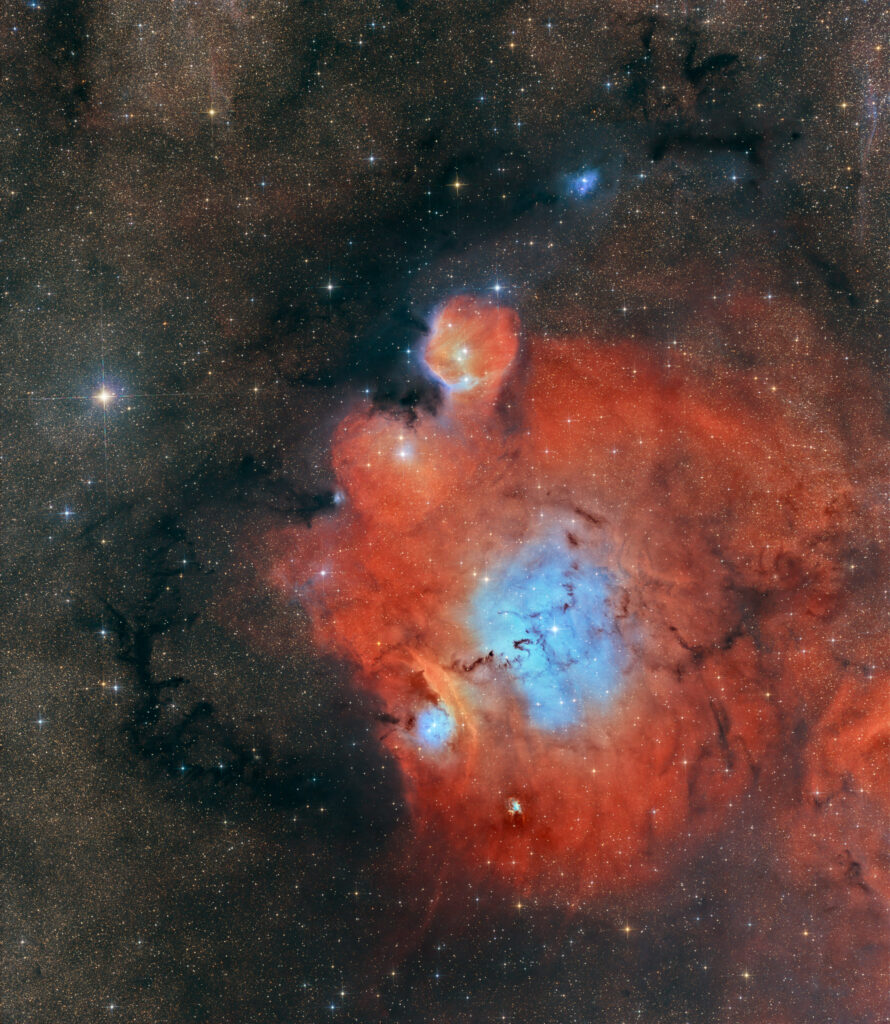
An assortment of nebulae in Sagittarius, very close to the well-photographed Lagoon, thus sort of completing the Lagoon footprint, which made me come up with this nickname.
This is a narrowband (SII, H-alpha, OIII) plus RGB image. For rendering the NB data, I used the “Foraxx” palette described in The Coldest Nights blog along with other techniques. Worked rather well, a pure SHO approach would yield a very green image. Stars are color-calibrated RGB.
Emission and reflection nebulae in this field: IC 1274/1275/4684/4685, NGC 6559
The strange object below and right of NGC 6559 is the planetary nebula PN M 1-41
(RA 18 09 30.10, DEC -24 12 26.0).
More details at Astrobin.
Continue reading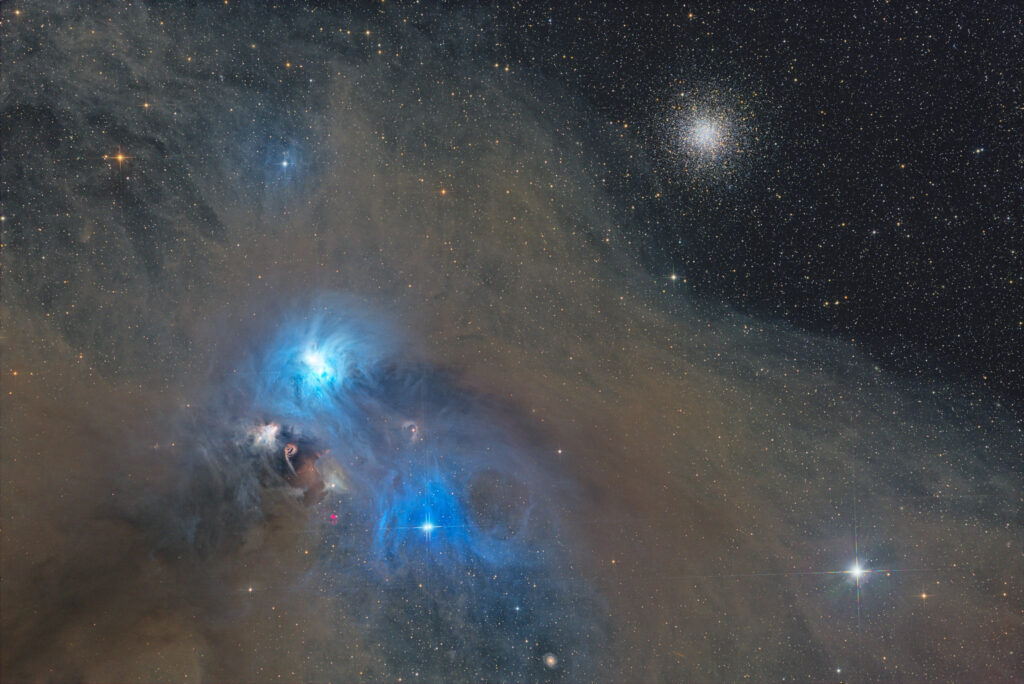
One of most beautiful region in the southern skies, the Corona Australis Molecular Cloud with the NGC 6726 and IC 4812 reflection nebulae and nearby Chandelier Cluster NGC 6723. The later belongs to Sagittarius, though.
More details at Astrobin.
Continue reading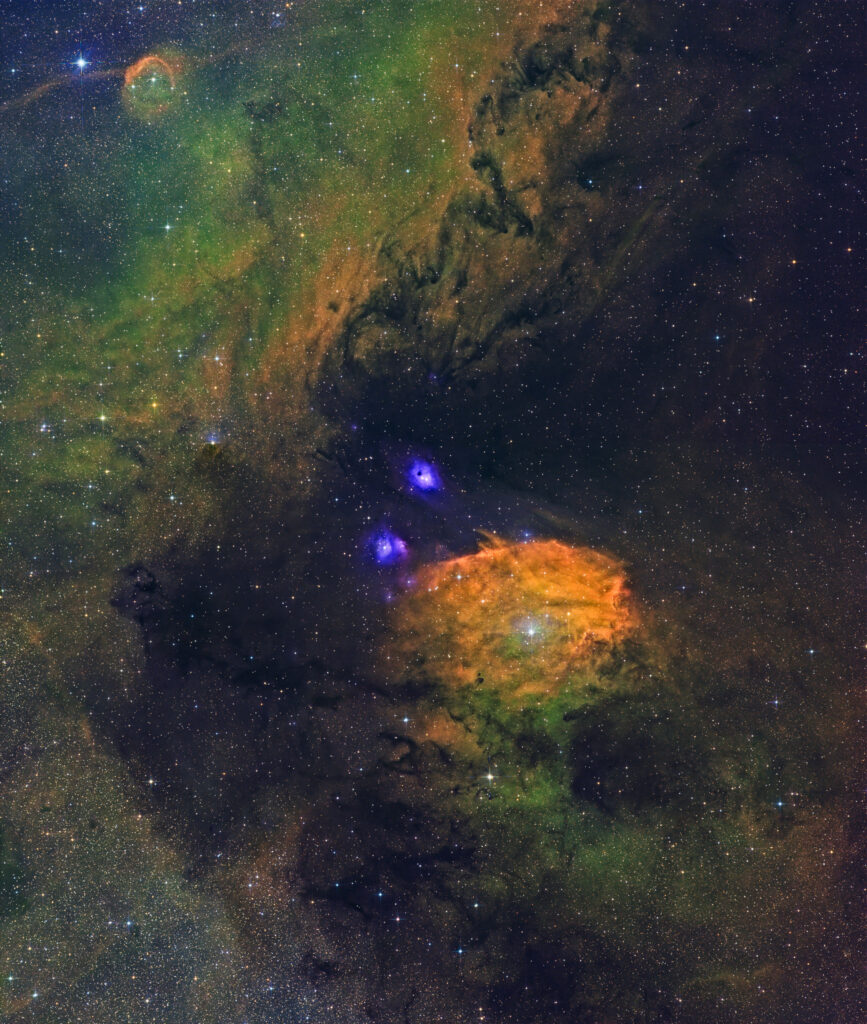
A 2 panel mosaic of SHO data in Sagittarius, the reflection nebulae NGC 6589/90 and Surroundings, in particular the emission nebulae IC 1283 und IC 1284. NGC 6590 also seems to be cataloged as NGC 6595.
More details at Astrobin.
Continue reading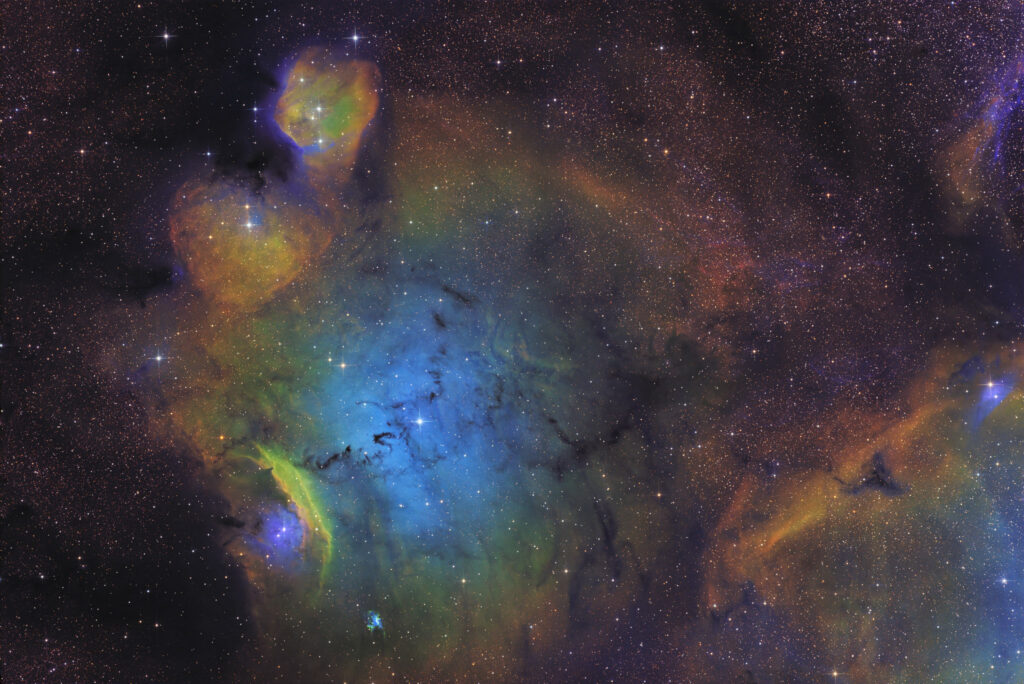
Another SHO image, this time from the heart of the Milkyway in Sagittarius, NGC 6559 (in the lower left) and friends.
More details at Astrobin.
Continue reading