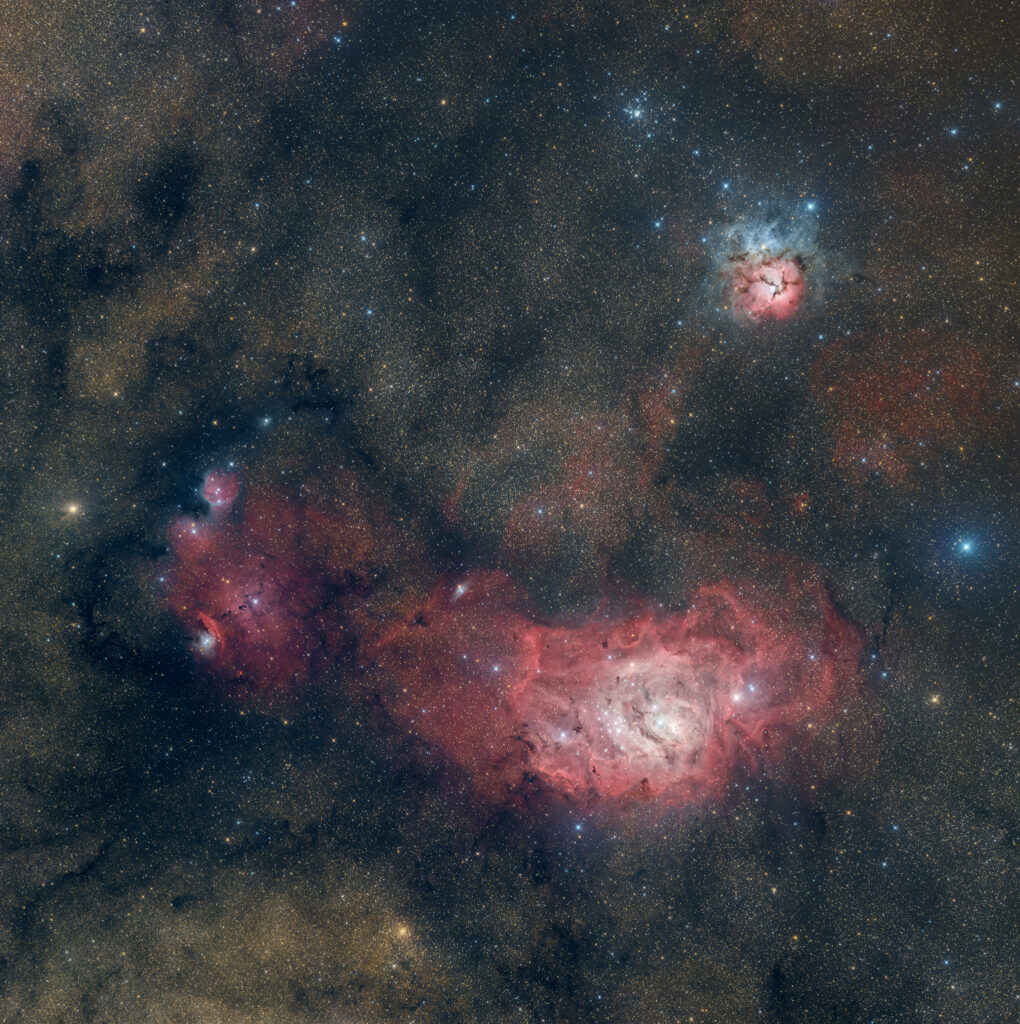
Another widefield, two-panel mosaic with the remote Epsilon-130D and well known objects in the heart of the Milky Way: Trifid and Lagoon with a lot of surrounding nebulae and star clusters.
More details at Astrobin.
Continue readingAnother widefield, two-panel mosaic with the remote Epsilon-130D and well known objects in the heart of the Milky Way: Trifid and Lagoon with a lot of surrounding nebulae and star clusters.
More details at Astrobin.
Continue reading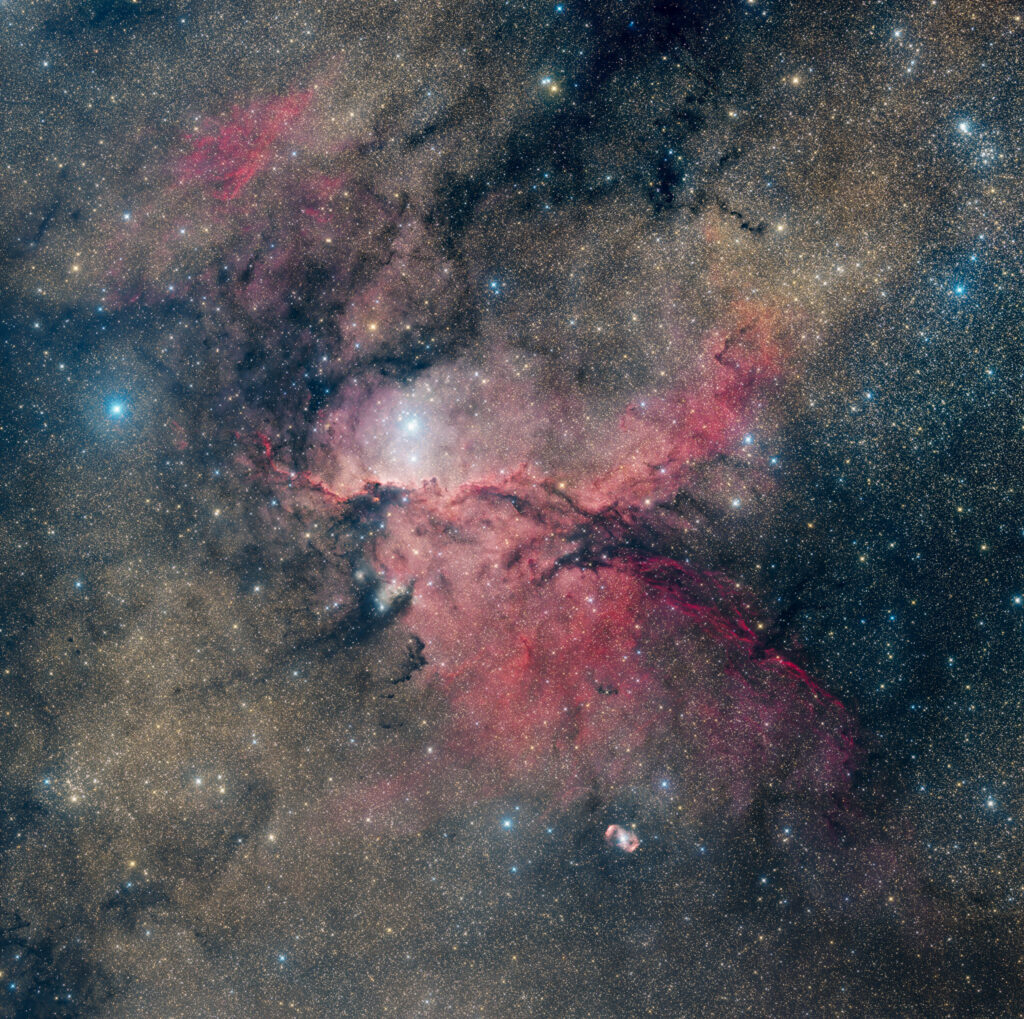
A well-known target revisited with the Epsilon-130D widefield astrograph. NGC 6188 – the Firebird Nebula or the Fighting Dragons of Ara – energized by the NGC 6193 cluster. Below the main emission nebula, this field includes NGC 6164/65 – the Dragon’s Egg.
More details at Astrobin.
Continue reading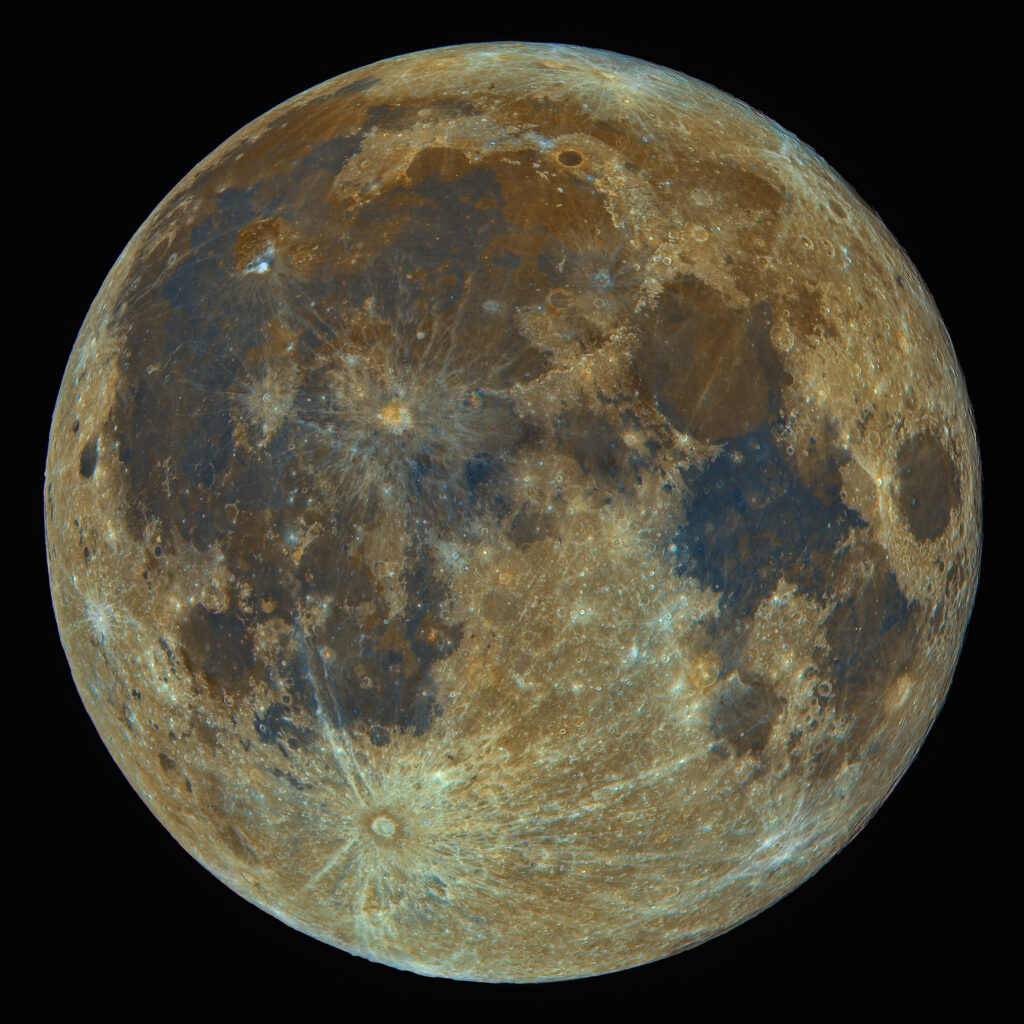
Also dubbed “Full Buck Moon”, here’s a colorful rendition of the last full moon before the total solar eclipse of 12 Aug 2026.
More details at Astrobin.
Continue reading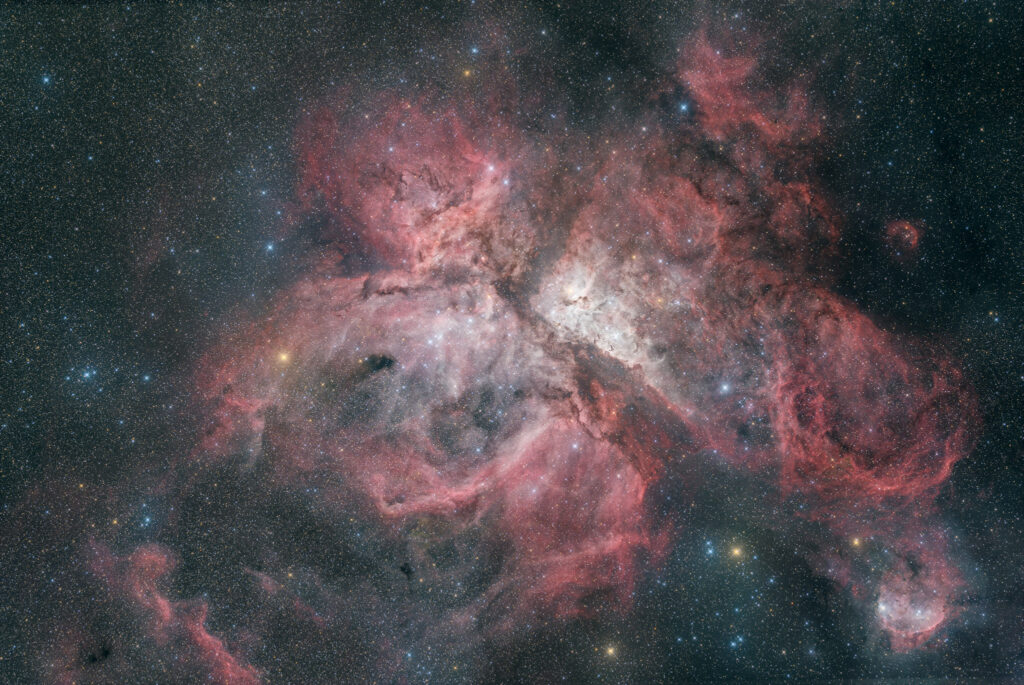
Since April 2026 the IAS 10″ remote telescope “Lukas” features a piggybacked Epsilon-130 with an ASI2600MC one-shot-color camera, with a way wider field of view than the main telescope. Ideal for comets und overview images.
The first test target was – of course, under southern skies – the vast expanse of the Carina Nebula, just a bit more than two hours of exposure time.
Many thanks to Thomas Klemmer for providing the scope and the camera.
More details at Astrobin.
Continue reading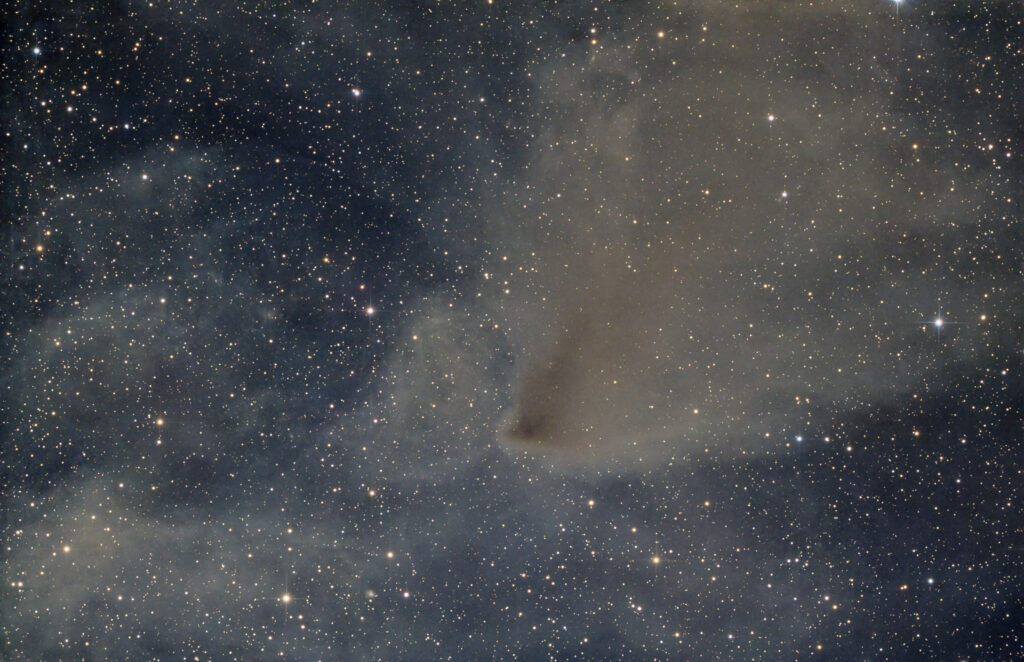
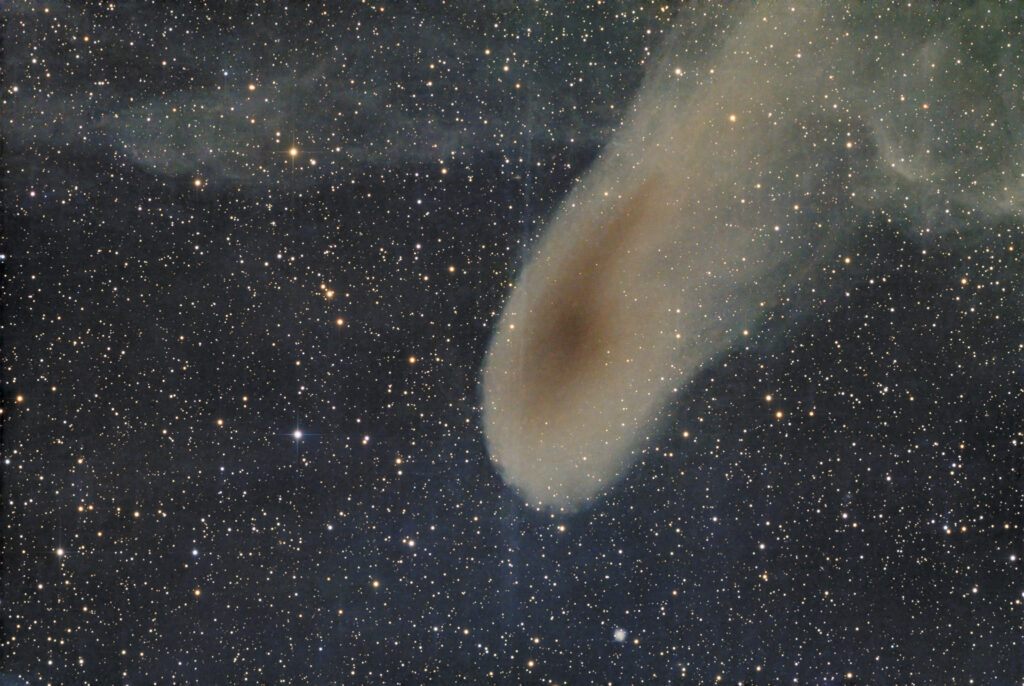
More close-ups with the longer focal length of the Cassegrain (4500 mm) at the IAS Hakos Observatory, Namibia, portraying cometary globules CG 20 and 21.
And of course adding to my growing catalog of cometary globules.
More details at Astrobin: CG 20, CG 21
Continue reading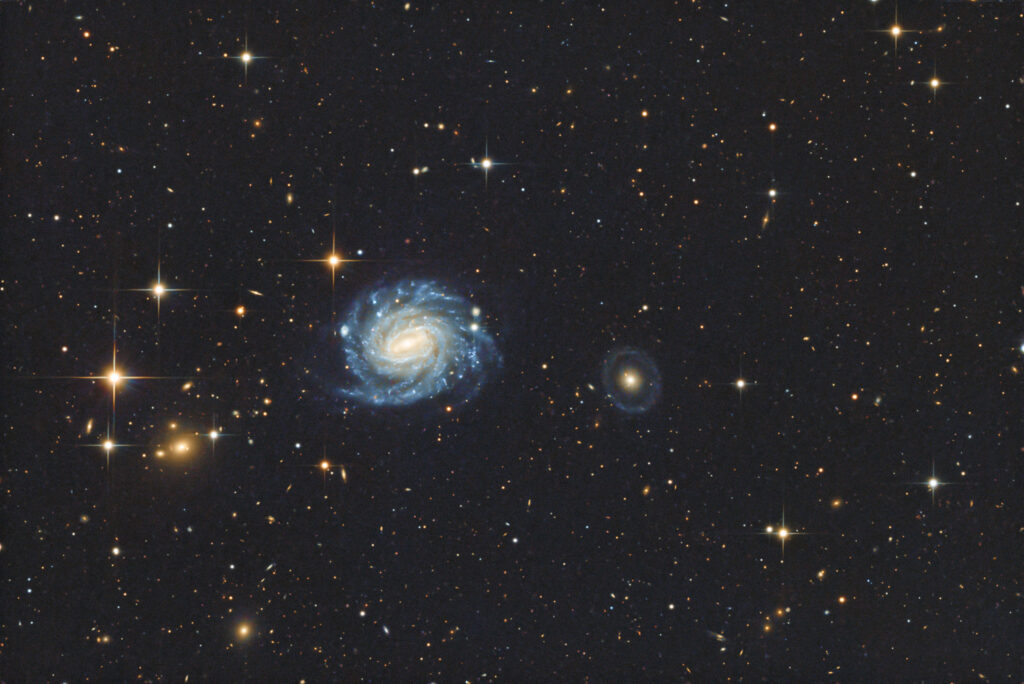
A second attempt at NGC 3660 and friends, previously imaged here, with the longer focal length of the Cassegrain (4500 mm) at the IAS Hakos Observatory, Namibia.
More details at Astrobin.
Continue reading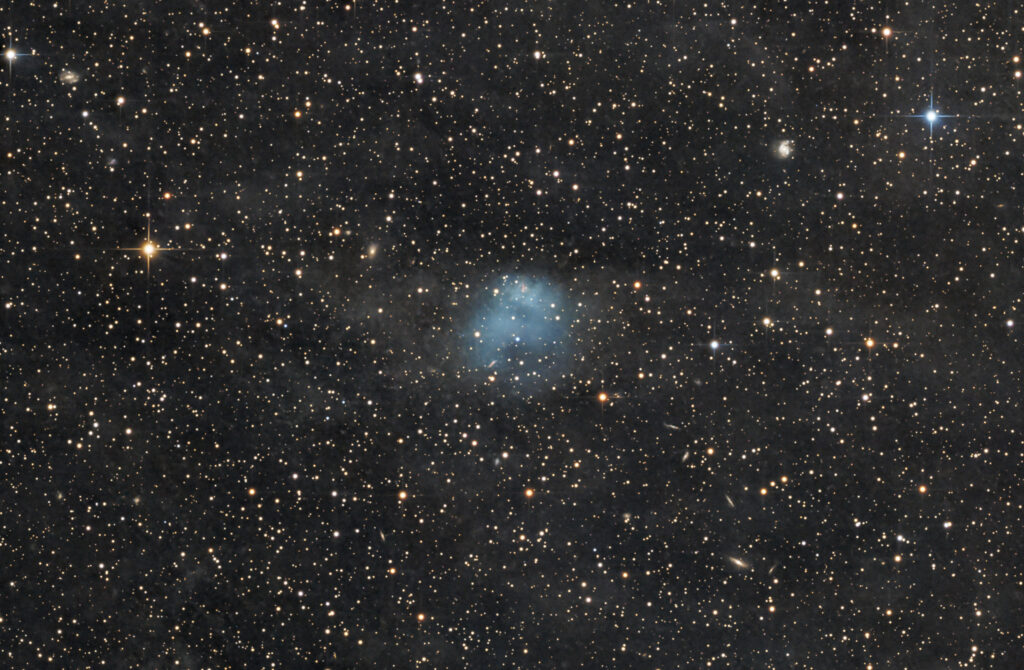
Imaged at the IAS Hakos Observatory, Namibia with the 20″ Philipp Keller Cassegrain at full focal length of 4500 mm, f/9, this oddball object is listed both as a galaxy (PGC 49877) and a planetary nebula (Fr 2-8).
Quoting from Planetary Nebulae in the Solar Neighbourhood: Statistics, Distance Scale and Luminosity Function by David John Frew
Fr 2-8 (Fr 1400-5102, AM 1357-504, LEDA 49877). This small nebula, about 2′ across, was found serendipitously from SHASSA field 057, while measuring a Hα flux from the nearby PN MeWe 2-4, and has been confirmed spectroscopically as a high-excitation PN, with the 2.3m MSSSO telescope. The position is coincident with the SIMBAD ‘galaxy’ AM1357-504 (Arp & Madore 1987). It had been independently noted as a PN by Cˆote et al. (1997), but no details were provided in their paper.
Interestingly enough, the team around IAS member Uwe Glahn observed this object visually at Hakos back in 2009.
More details at Astrobin.
Continue reading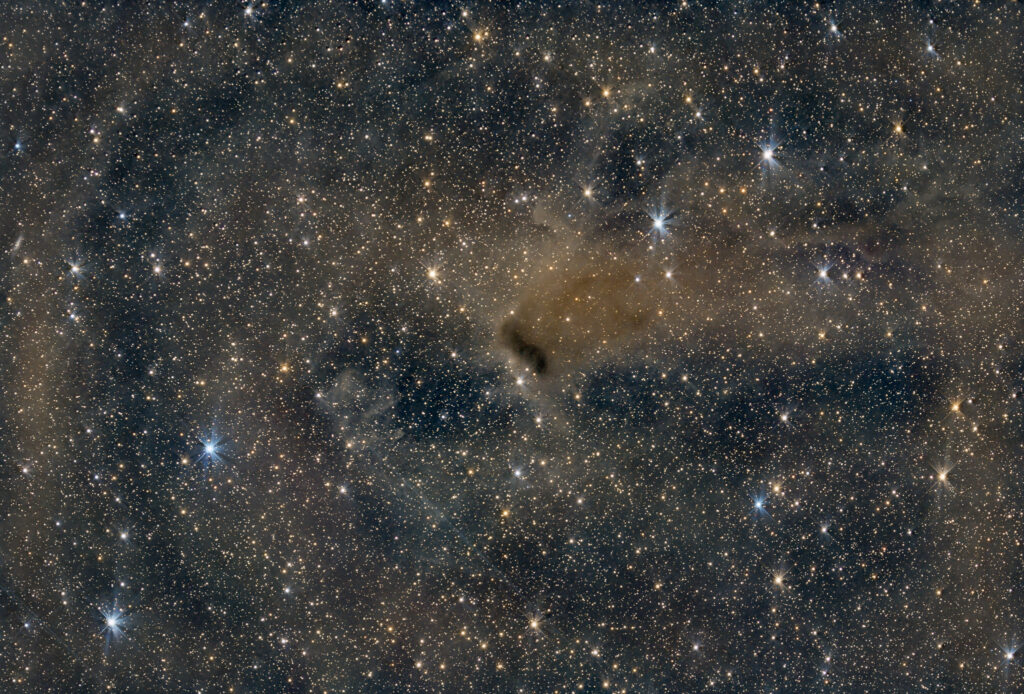
Results from the second night at the IAS observatory on the Gamsberg plateau with the 28 inch Newtonian “Wolf-Peter-Hartmann-Teleskop”, adding to my growing catalog of cometary globules.
Alas, sky flats at dusk didn’t work well, so some of the dust struture seen here may be artefacts of the calibration and gradient removal.
More details at Astrobin.
Continue reading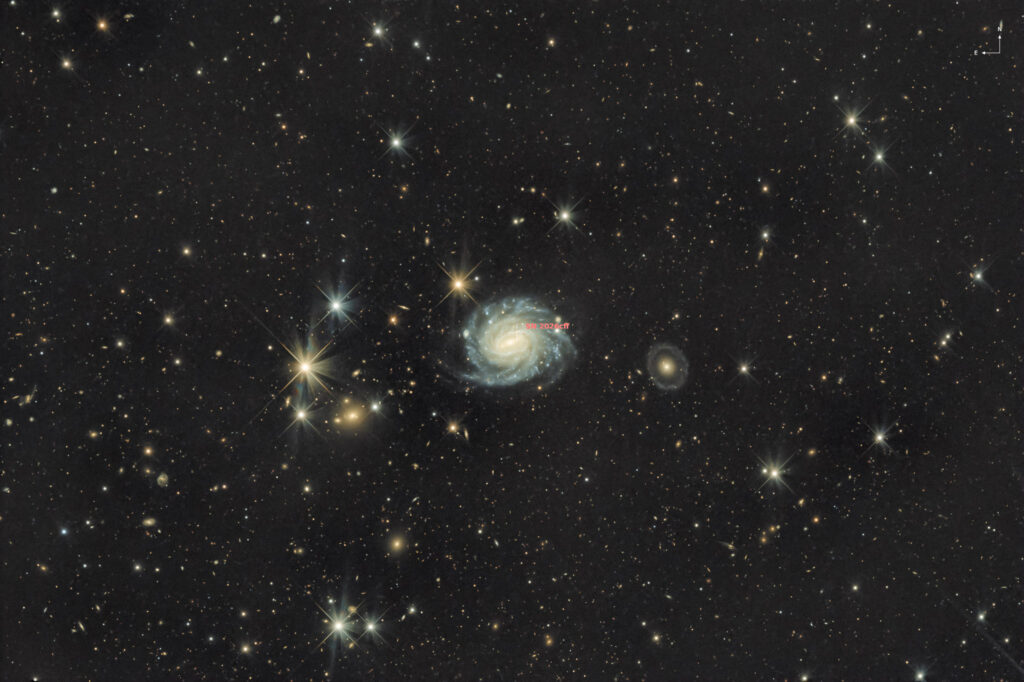
First result from this year’s trip to Namibia, including two nights at the IAS observatory on the Gamsberg plateau using the mighty 28 inch Newtonian telescope for astrophotography. I came across this field of view when observing the supernova SN 2026cff in NGC 3660 with the IAS remote telescope and noticed the near-by, peculiar Hoag-type galaxy PGC1000714 with its ring structure.
More details at Astrobin.
Continue reading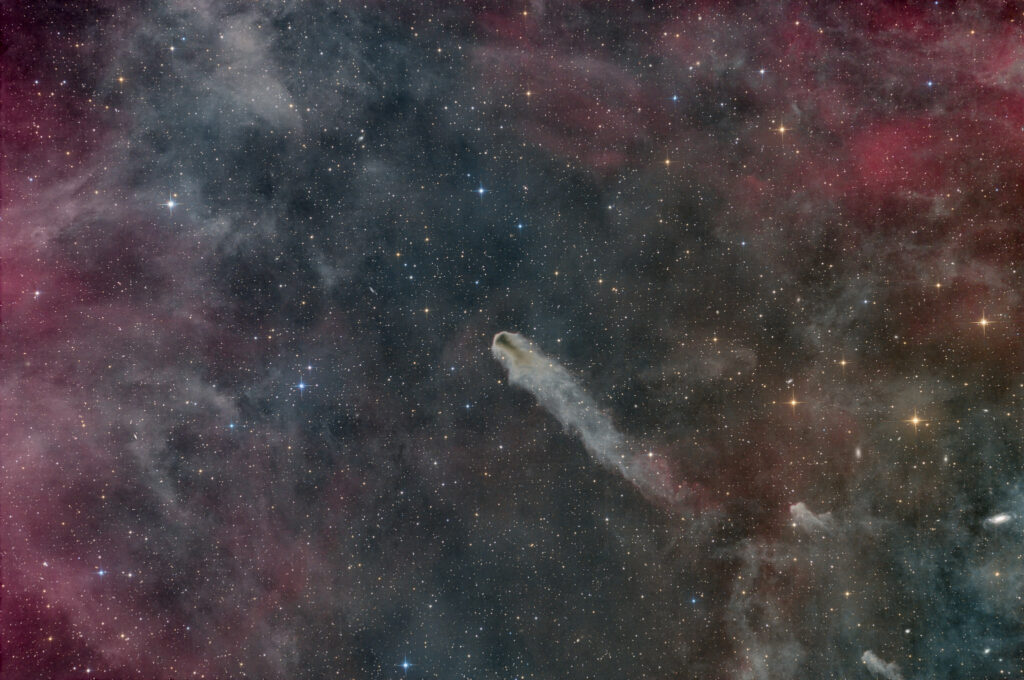
Continuing the growing catalog of cometary globules, here comes CG 14.
More details and full resolution at Astrobin.
Continue reading